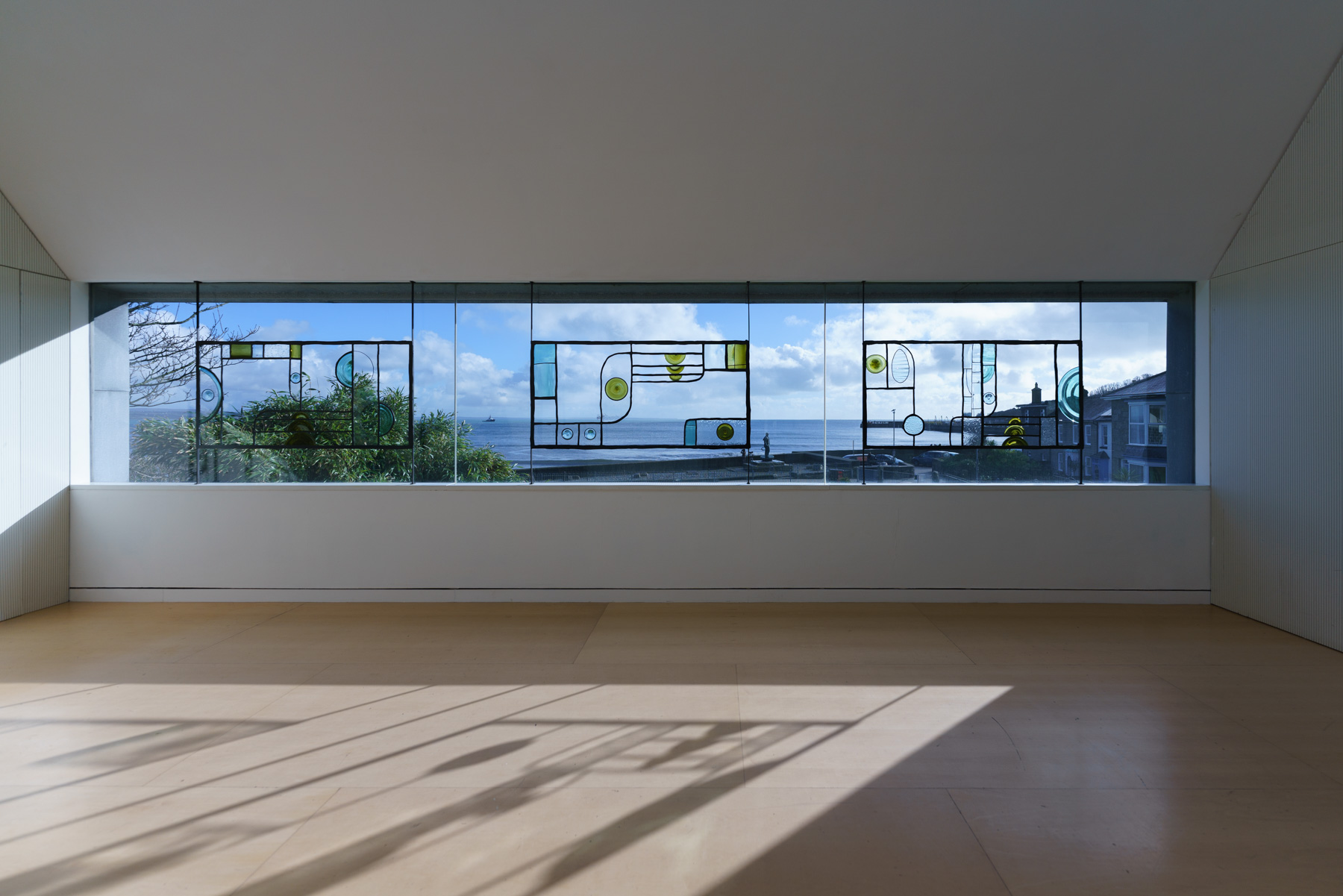
Gyre (2025). Glass made of sand and seaweed, with steel frame. Installed as part of Walking A Cappella in the Studio at Newlyn Art Gallery and The Exchange. Photo by Nick Cooney.
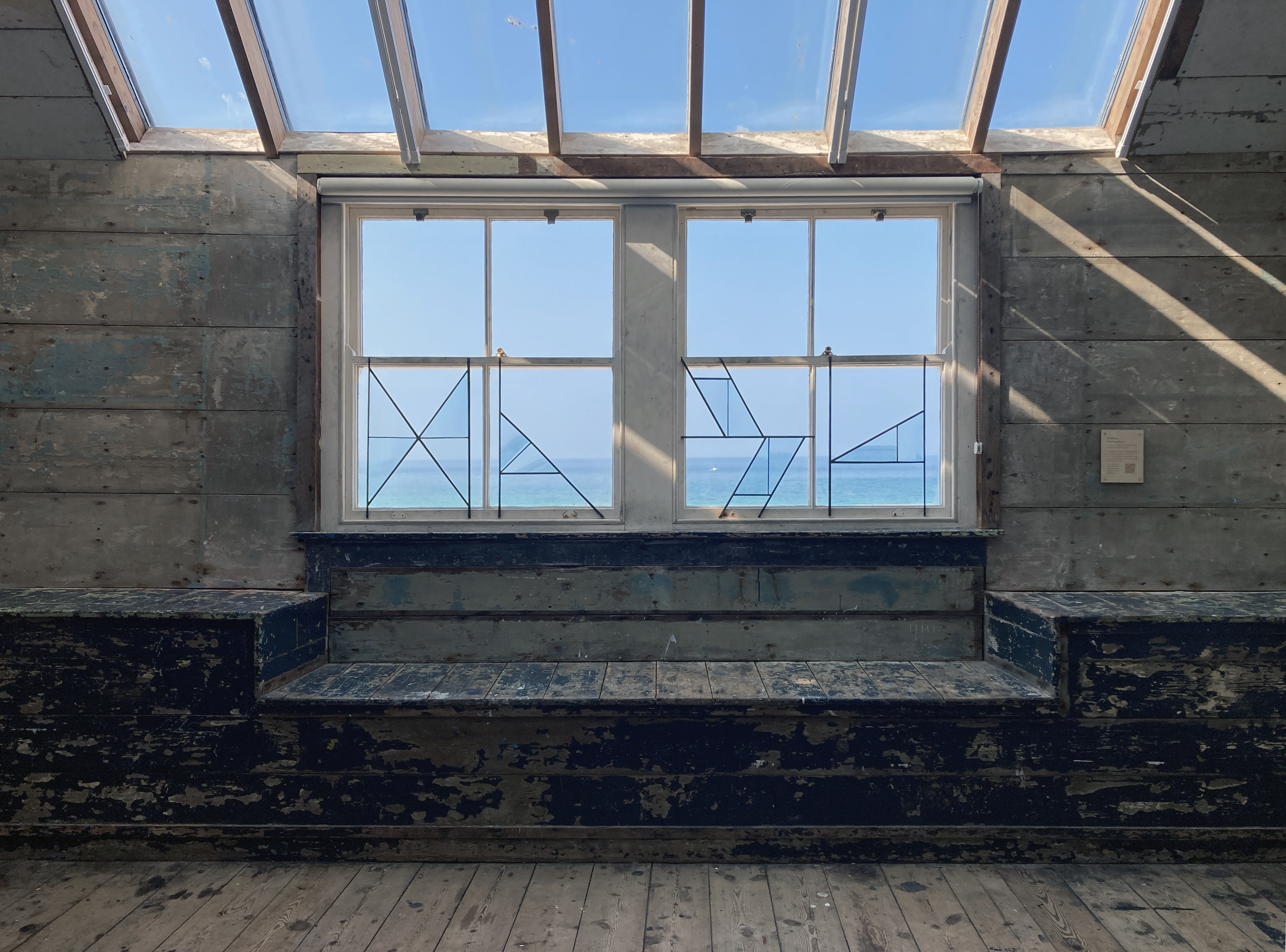
Porthmeor (2021). Glass made of sand from Porthmeor Beach, with steel frame. Installed in the Borlase Smart Room at Porthmeor Studios.
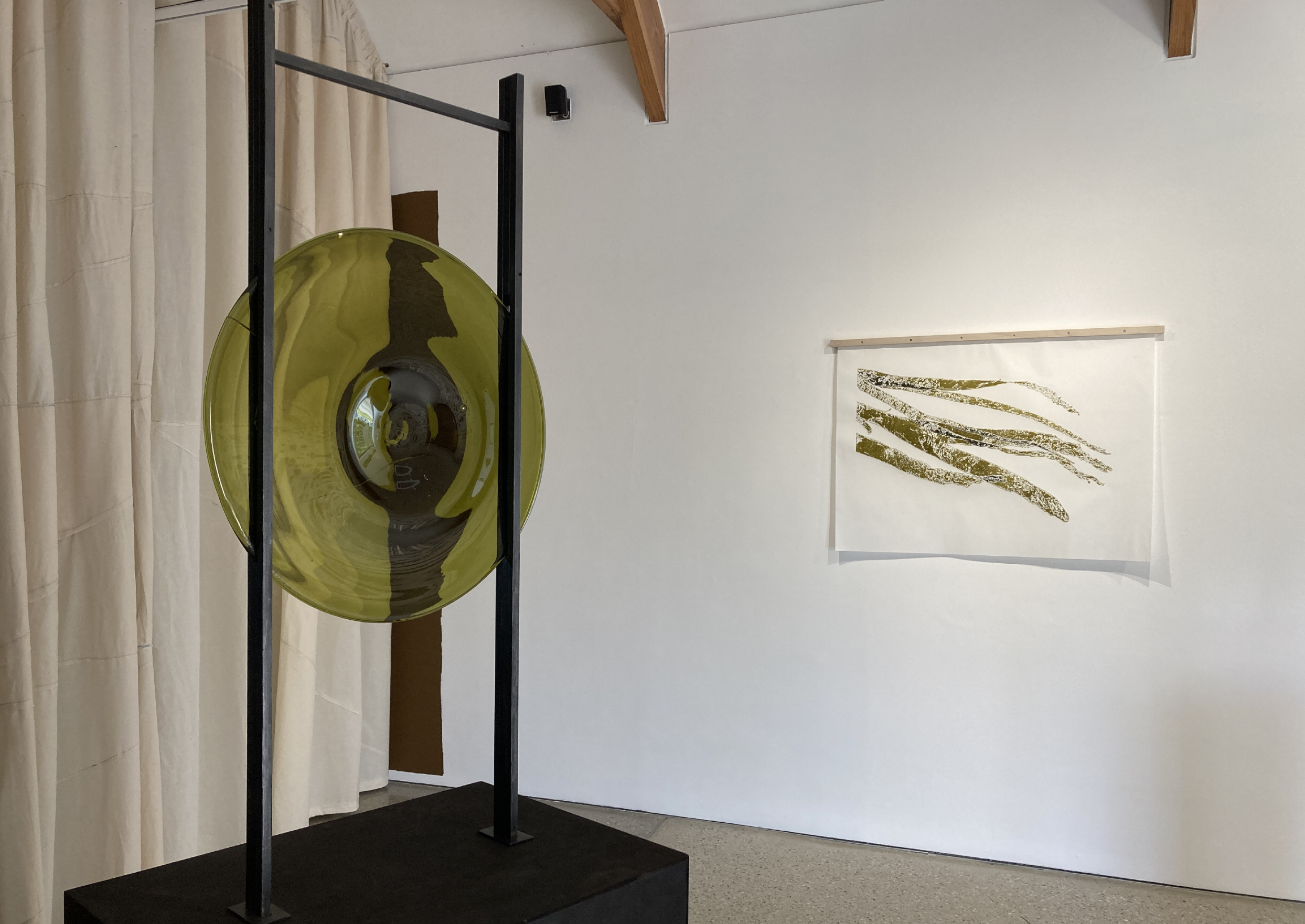
Kelp Glass Roundel (2021). Glass made from seaweed and Helford river sand, with steel frame. Installed as part of Flux at Kestle Barton, Cornwall. Photo by Nick Cooney.
‘This glass is a beach refined by hands and then fire, shaped by breath and gravity…’
In Cornwall, seaweed was once gathered, burnt, and sold to the glass industry as flux, to lower the melting point of sand enough for it to become glass. Understanding that it might therefore be possible for a beach to become glass, Reynolds spent the summer of 2019 attempting it, as documented in her short film Flux.
Sand from Porthmeor beach gives a blue glass, because of copper in the sand. Boscean, a beach on the Helford river gives an olive green glass because of the presence of iron. The glass is often displayed as a simple roundel.
Over time the mouth-blown glass has been formed into larger art works. In 2021, Porthmeor was made from small panes of kelp glass set in copper. The sand for this piece was gathered from Porthmeor beach in St Ives - directly in front of my studio windows. It was installed in the Borlase Smart room at Porthmeor Studios, where you can look at the beach through the lens of itself. In 2022 roundels of the Helford glass became part of Tre at Kresen Kernow. For Walking A Cappella at Newlyn Gallery in 2026 the glass was used in a triptych titled Gyre across the sea-facing window of the Studio. Here the design is influenced by the flows of in-shore currents.
The companion book Flux which describes the making of the glass is available on my bookshop.